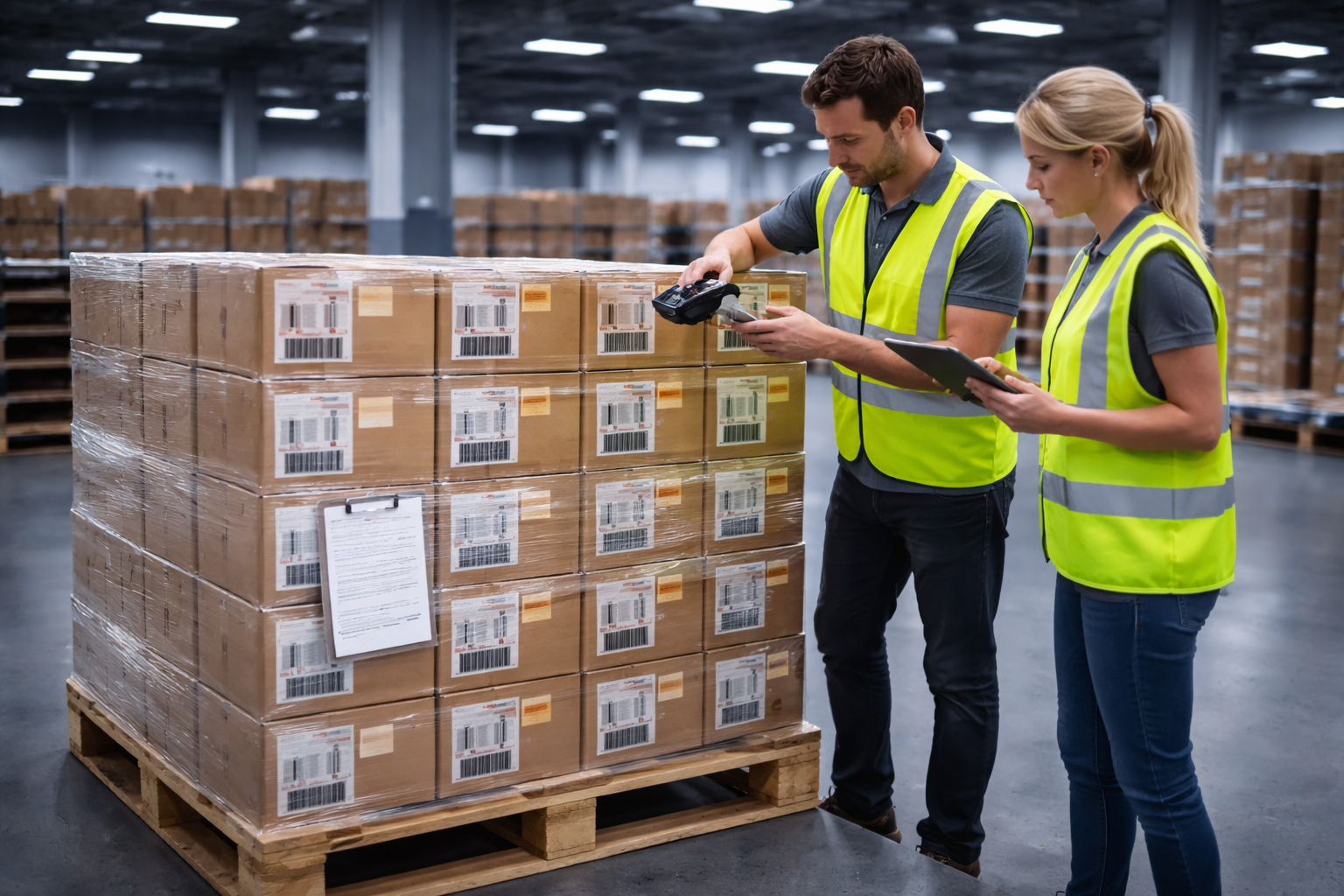
Why Real Time Order Visibility Is Now Essential for Modern Fulfilment
Real-time order visibility has become essential as order volumes grow, customer expectations increase, and fulfilment operations become more complex.

Real-time order visibility has become a critical requirement for modern fulfilment operations. As customer expectations increase and order volumes grow, fulfilment teams are under constant pressure to move faster, respond sooner and maintain accuracy at scale.
- Why orders slow down without real time visibility.
- How delayed or fragmented updates increase operational risk.
- How live data improves prioritisation, communication and workflow balance.
- The structured six step workflow used to implement real time order control.
- What is included in the real time order management package and optional enhancements.
The Hidden Cost of Delayed Visibility
When order data is not live, issues are rarely spotted at the point they occur.
Exceptions, errors and order holds often sit unnoticed until customers chase updates or backlogs become visible on the warehouse floor. By the time teams react, the impact has already spread across picking, packing and dispatch.
Urgent orders suffer the most. Time-sensitive, high-value or VIP orders are easily lost inside outdated queues, making it difficult for teams to act decisively when it matters most.
Bottlenecks also form silently. A slowdown in one area of the operation may not be obvious until work has already stacked up, turning a small delay into a larger disruption that is harder to recover from.
Customer service teams feel the pressure too. Without live order status, they are forced to rely on partial or outdated information, leading to inconsistent updates and reduced customer confidence.
Why Real-Time Visibility Changes Everything
Real-time order visibility removes uncertainty from fulfilment operations.
When teams can see what is happening as it happens, decision-making becomes faster, calmer and more accurate. Issues are surfaced early, priorities are clearer, and small problems are resolved before they become operational failures.
Live alerts allow delays, exceptions and priority orders to be addressed immediately. High-priority orders move through the warehouse without unnecessary friction, and workloads can be balanced dynamically as pressure builds in specific areas.
For customer service teams, real-time data provides confidence. Accurate order updates can be shared instantly, without switching between systems or interrupting warehouse staff.
The result is a shift from reactive firefighting to proactive control.
How Real-Time Visibility Is Typically Implemented
Across modern fulfilment operations, successful real-time visibility follows a consistent pattern.
First, the existing order journey is reviewed to identify timing gaps and friction points. Systems are then aligned to ensure data can be surfaced live from the WMS and sales channels. Clear rules are established around priorities, alerts and order statuses so teams are focused on what matters operationally.
Live dashboards are configured for both warehouse teams and management, providing immediate insight without adding complexity. Once launched, the setup is refined continuously, using real-world data to smooth flow and reduce bottlenecks.
The key is simplicity. Real-time visibility only works when it supports the operation, rather than becoming another system to manage.
The Operational Advantage of Seeing Everything Live
Fulfilment operations that operate with real-time order visibility are consistently more resilient.
Bottlenecks are smaller and shorter-lived. Decisions are based on what is actually happening, not what happened earlier in the day. Customer communication improves, and internal pressure decreases as teams gain clarity and control.
As order volumes increase, delayed data becomes a liability. Real-time visibility is no longer a “nice to have”. It is a foundational capability for modern fulfilment.
Key takeaways
- Delayed operational data creates hidden risk
- Real-time visibility enables faster, more confident decisions
- Proactive fulfilment outperforms reactive fulfilment as volumes scale
Want to explore real-time order visibility in practice?